

Last updated: July 22, 2026
TL;DR: Selling a Savannah home in 2026 typically costs about 8 to 10 percent of the final sale price all in. The biggest expenses are real estate commission, Georgia seller closing costs, pre-listing repairs, and the monthly cost of owning the home while it sits on the market. Most sellers focus on the sale price. The smarter move is understanding your net proceeds before you ever accept an offer.
I’ve sat at a lot of Coastal Georgia closing tables. The number on the settlement statement is almost never what the seller expected when they first called me. Here is the math, line by line, so you actually know what you will walk away with.
One of the biggest misconceptions I hear is, “If my home sells for $450,000, I’ll walk away with about $450,000.”
That’s almost never how it works.
Selling a home comes with real costs, and some of them are easy to overlook until you’re already under contract. Real estate commission gets most of the attention, but it is only one line on the settlement statement. Closing costs, repairs, attorney fees, mortgage payoff, HOA charges, utilities while the house sits, and negotiated buyer credits all affect your final number.
Bottom line, never assume. You can’t expect what you don’t inspect.
Whether you’re selling in Savannah, Pooler, Richmond Hill, Wilmington Island, Tybee Island, Port Wentworth, Rincon, or Hinesville, the process is remarkably similar. The exact figures change from property to property, but the categories rarely do. Sellers who understand those categories before listing almost always make better decisions throughout the transaction.
One thing I do with every seller is prepare an estimated net sheet before we even talk seriously about offers. It’s one of the most valuable planning tools you’ll receive because it shifts the conversation away from “What can I sell for?” and toward “What will I actually keep?”
Those are two very different questions.
I’ve seen homeowners celebrate receiving an offer that was $10,000 higher than expected, only to discover later that additional repair credits, another month of mortgage payments, and closing expenses wiped out most of that difference.
I’ve also seen sellers accept a slightly lower offer that closed quickly and actually put more money in their pocket because they avoided another two months of carrying costs.
The highest offer isn’t always the best offer.
The highest net is.
The 8 to 10 Percent Rule (And What Is Actually in That Number)
If someone asks me for a quick rule of thumb, I usually tell them to budget 8 to 10 percent of the home’s selling price for total selling expenses.
That doesn’t mean every seller spends exactly that amount. A move-in-ready home with multiple offers may come in below that range. A property that needs repairs or sits on the market for several months may exceed it.
The important part is understanding where the money goes.
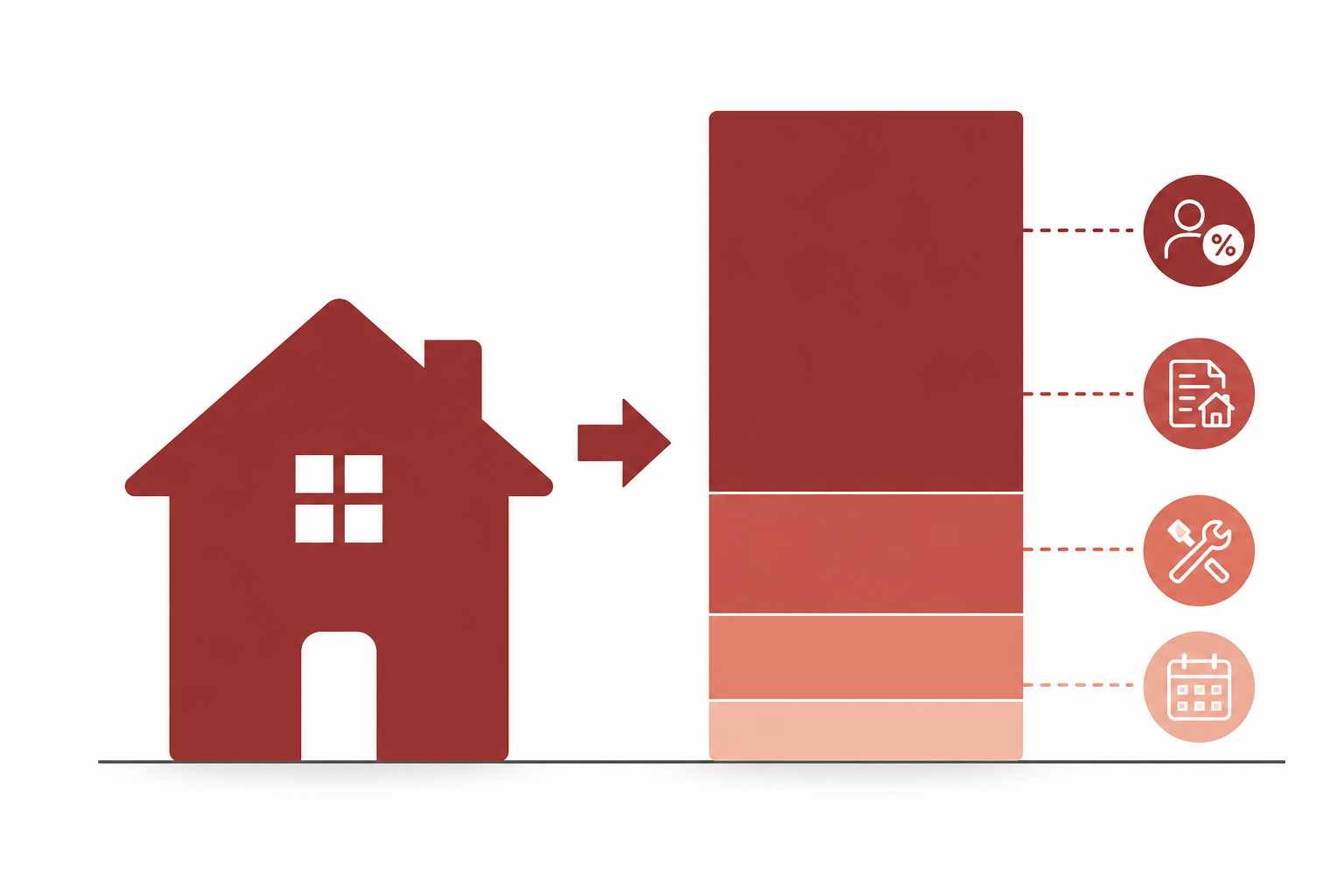
For most Savannah-area sales, your total costs generally break down something like this:
| Expense | Typical Range |
|---|---|
| Real estate commission | Approximately 5 to 6% (negotiated) |
| Georgia seller closing costs | Approximately 1 to 1.5% |
| Repairs and listing preparation | Approximately 1 to 2% |
| Holding costs while selling | Approximately 0.5 to 1% |
Together, those categories usually account for nearly every major expense you’ll see before the proceeds are wired to your account.
Commission Is Usually the Largest Expense
Real estate commission is still the largest single line item for most sellers.
Following the industry changes that took effect after the 2024 settlement, commission is no longer viewed as a standard percentage across every transaction. Compensation is negotiated, just like every other contract term.
That means every listing deserves its own strategy.
Sometimes a seller may agree to offer compensation to a buyer’s representative during negotiations. Sometimes that conversation looks very different depending on market conditions, competition, financing, and the overall strength of the offer.
Headlines don’t determine your transaction.
Your contract does.
Georgia Closing Costs Add Up Faster Than Most Sellers Expect
The next category catches many homeowners by surprise.
Georgia is an attorney-closing state, so there are legal settlement costs built into virtually every transaction. Sellers may also pay transfer tax, title-related expenses, recording charges, payoff coordination fees, HOA documentation, and several smaller administrative costs.
Individually, many of these fees don’t seem significant.
Together, they absolutely are.
That’s why I encourage every seller to review an estimated settlement statement long before accepting an offer.
When you understand the numbers ahead of time, negotiations become much easier.
Preparing the House Costs Money, Too

Holding Costs Are the Silent Profit Killer
One expense almost nobody budgets correctly is simply continuing to own the home. Every month your property remains unsold usually means paying another:- Mortgage payment
- Property tax allocation
- Homeowners insurance premium
- HOA dues
- Electric bill
- Water bill
- Lawn maintenance
- HVAC costs
- Internet or security monitoring
Focus on Your Net, Not Just Your Sales Price
One lesson I’ve learned after years of helping families across Coastal Georgia is that the highest contract price doesn’t automatically produce the biggest check at closing. I’ve seen sellers reject an early offer because they wanted another $10,000. Sixty days later, after additional mortgage payments, insurance, utilities, lawn care, repair requests, and price reductions, they accepted less and walked away with a smaller net than the original offer would have produced. That’s avoidable. The best sellers don’t simply ask, “What is my house worth?” They ask, “What will I actually keep after everything is paid?” That’s the question every decision should answer. Next up: I’ll break down every line item you’ll typically see on a Savannah seller’s closing statement, including commission, title insurance, transfer tax, attorney fees, HOA charges, recording costs, wire fees, and the expenses that surprise homeowners most often. Line-by-Line: Every Cost a Savannah Seller Actually Pays Once your home goes under contract, the settlement statement starts taking shape. This is where the estimated numbers become real numbers. Some expenses are fixed. Others depend on the contract you negotiated. Either way, every line affects what you actually take home on closing day. This is why I spend so much time reviewing a seller’s projected net before we ever sign a purchase agreement. A strong offer isn’t just about the purchase price. It’s about what remains after every deduction. Here’s what most Savannah sellers should expect to see.Real Estate Commission
Commission is usually the largest single expense when selling a home. Since the industry changes that followed the 2024 settlement, commission is no longer treated as a standard number across every transaction. Sellers negotiate the listing brokerage compensation in their listing agreement, and buyer representation compensation is negotiated separately through the purchase contract. That means there isn’t a one-size-fits-all answer anymore. Every transaction is different. Some buyers ask for seller-paid compensation toward their representation. Others structure the deal differently. In competitive situations, sellers may receive multiple offers with different terms that affect the overall net proceeds. That’s why comparing offers strictly by purchase price is risky. A $450,000 offer with fewer seller-paid costs may produce a better bottom line than a $460,000 offer loaded with concessions. The math matters more than the headline number. Georgia licensees continue to operate under the rules established by the Georgia Real Estate Commission, and every listing agreement should clearly explain how compensation is being handled.Owner’s Title Insurance
Many sellers are surprised to see title insurance appear on the settlement statement. In Georgia, responsibility for the owner’s title insurance policy is negotiable and often follows local custom, but every purchase agreement ultimately controls who pays for what. Title insurance protects against defects in ownership history that may not have been discovered during the title examination. Issues can include:- Recording mistakes
- Unknown heirs
- Undisclosed liens
- Forged documents
- Errors in previous deeds
Georgia Real Estate Transfer Tax
Georgia assesses a real estate transfer tax whenever property ownership changes. The amount is relatively small compared to the total sale price, but it’s still part of the seller’s overall closing costs. Current transfer tax rules are maintained by the Georgia Department of Revenue, and your closing attorney calculates the appropriate amount during settlement. This isn’t usually the fee that surprises sellers. It’s simply another example of how lots of smaller expenses eventually become meaningful.Attorney and Closing Fees
Georgia is an attorney-closing state. Unlike many states where title companies conduct the closing independently, Georgia real estate closings are handled by licensed attorneys. The closing attorney coordinates nearly every moving piece, including:- Preparing settlement documents
- Reviewing title work
- Coordinating lender instructions
- Recording legal documents
- Collecting and distributing funds
- Managing escrow
- Finalizing ownership transfer
Mortgage Payoff Coordination
If you still owe money on your mortgage, that loan must be paid off before ownership transfers. Your lender provides an official payoff statement showing exactly how much is required to satisfy the loan on your scheduled closing date. That figure changes daily because of interest accrual. Many sellers estimate their payoff based on their online mortgage balance. Don’t. The official payoff is almost always different. I’ve had sellers think they had significantly more equity than they actually did simply because they never requested an updated payoff statement.Home Equity Loans and Other Liens
Primary mortgages aren’t the only debts that appear on a settlement statement. You may also see:- Home equity loans
- HELOC balances
- Tax liens
- Contractor liens
- Judgment liens
- Utility liens
HOA Estoppel Letters and Transfer Fees
If your property is part of a homeowners association, additional paperwork is often required before closing. Depending on the community, sellers may be responsible for:- Estoppel certificates
- Account verification
- Transfer fees
- Capital contribution fees
- Resale package charges
Recording Fees
Every ownership transfer requires new documents to be officially recorded with the county. Recording fees help cover the cost of entering those documents into the public record. They’re generally modest. They’re also unavoidable.Courier, Wire, and Administrative Charges
These are the fees almost nobody remembers. Until they appear on the settlement statement. Depending on the transaction, you may see charges for:- Wire transfers
- Overnight delivery
- Document preparation
- Electronic recording
- Notary services
- Administrative processing
Property Taxes
Property taxes are prorated between buyer and seller based on the closing date. That means you only pay your share for the portion of the year you owned the property. Sometimes you’ll receive a credit. Sometimes you’ll owe additional funds. Either way, your closing attorney calculates the adjustment.Utility Adjustments
Most utility companies bill after service has already been used. Depending on the timing of your closing, you may owe prorated utility charges through the day ownership transfers. This isn’t usually a major expense. It’s simply another reminder that ownership costs don’t stop until closing is complete.Repair Credits Can Change Everything
One of the biggest variables isn’t listed anywhere until after inspections. Repair negotiations. A buyer may request:- Roof repairs
- HVAC servicing
- Plumbing corrections
- Electrical work
- Moisture remediation
- Crawlspace improvements
- Seller credits instead of repairs
Why I Always Build a Seller Net Sheet First
One of the first things I prepare for my clients isn’t a marketing plan. It’s a projected seller net sheet. We estimate:- Mortgage payoff
- Commission
- Closing costs
- Taxes
- HOA fees
- Estimated repairs
- Typical settlement expenses
Pre-Listing Costs People Forget to Budget
The easiest money to lose when selling a home is the money you never planned to spend. Most homeowners remember commission. Many remember attorney fees. Almost everyone forgets about the dozens of smaller expenses that happen before the first buyer ever walks through the front door. The good news is that many of these costs are optional. The better news is that spending the right money before listing often saves much larger amounts later during negotiations. I tell sellers to think about preparation the same way buyers think about inspections. Every unfinished project becomes a question. Every question creates uncertainty. And uncertainty usually costs money.A Pre-Listing Home Inspection
One of the smartest investments some sellers can make is paying for their own home inspection before listing. No, every house doesn’t need one. But homes with older roofs, aging HVAC systems, crawlspace concerns, or deferred maintenance often benefit from knowing the facts before a buyer discovers them. A pre-listing inspection gives you three advantages. First, you control the timeline. Second, you choose the contractor instead of rushing to satisfy a repair deadline. Third, you reduce the chances of unpleasant surprises halfway through the transaction. I’ve seen relatively inexpensive repairs become expensive negotiations simply because the seller found out too late. Knowledge creates options.Professional Photography Is Not Optional
Today’s buyers usually see your home online before they ever schedule a showing. That means your first showing happens on a phone screen. Professional photography is one of the highest-return investments you can make before listing. Poor lighting. Dark rooms. Crooked photos. Cluttered countertops. These things don’t just create a bad impression. They reduce showing activity. Less showing activity often means fewer offers. Fewer offers reduce negotiating leverage. That’s an expensive chain reaction. Professional photography isn’t about making a home look different. It’s about showing the home accurately at its absolute best.Staging Doesn’t Mean Renting Expensive Furniture
Many sellers hear the word “staging” and immediately picture thousands of dollars in rented furniture. That’s rarely what I recommend. Most occupied homes simply need editing. Removing excess furniture. Packing personal collections. Opening up walkways. Creating better light. Making each room feel larger. Sometimes all that’s needed is rearranging what you already own. Other homes benefit from bringing in a few rental pieces to help buyers understand how a room functions. Every property is different. The goal isn’t decorating. The goal is helping buyers picture themselves living there.Repairs That Actually Matter
One of the biggest mistakes sellers make is spending money on improvements buyers don’t value. Another mistake is refusing to fix obvious maintenance issues that buyers absolutely notice. The sweet spot sits somewhere in the middle. According to the National Association of Realtors Remodeling Impact Report, improvements that improve appearance, maintenance, and everyday functionality often deliver stronger returns than luxury remodeling projects completed immediately before selling. I usually encourage sellers to prioritize things like:- Fresh neutral paint.
- Drywall repairs.
- Replacing damaged flooring.
- Updating worn caulk.
- Fixing leaking faucets.
- Repairing broken doors.
- Servicing garage doors.
- Repairing loose railings.
- Replacing burned-out light fixtures.
- Correcting obvious deferred maintenance.
Deep Cleaning Pays Off
A professionally cleaned home photographs better. Shows better. Smells better. Feels newer. That’s a strong return for a relatively modest investment. Areas that deserve special attention include:- Windows.
- Baseboards.
- Ceiling fans.
- Kitchen appliances.
- Bathrooms.
- Tile grout.
- Interior glass.
- Closets.
- Garage floors.
Landscaping Creates the First Impression
You only get one first impression. For most buyers, that’s the front yard. Simple improvements often have an outsized impact:- Fresh mulch.
- Trimmed shrubs.
- Pressure washing.
- Fresh pine straw.
- Healthy lawn edges.
- Weed removal.
- Seasonal flowers.
- Clean walkways.
HVAC Service and Moisture Control Matter in Coastal Georgia
Living near the coast means humidity is part of everyday life. Buyers notice musty odors immediately. So do inspectors. Before listing, I often recommend:- Replacing HVAC filters.
- Servicing the air conditioning system.
- Cleaning condensate lines.
- Running a dehumidifier if needed.
- Addressing visible moisture issues.
- Checking attic ventilation.
- Inspecting crawlspaces.
Small Projects Often Produce Big Returns
Some of the least expensive improvements are also the most noticeable. Walk through your home as if you’ve never seen it before. Ask yourself:- Does anything squeak?
- Does anything leak?
- Does anything smell?
- Does anything feel neglected?
- Would I notice this if I were buying?
Holding Costs While Your Home Sits (The Silent Line Item)
Holding costs rarely get discussed during listing appointments. They should. Every extra week your home stays on the market costs real money. Most sellers think only about getting a higher sales price. Far fewer think about what it costs to wait for it. The math adds up surprisingly fast. For many homes across Coastal Georgia priced between $400,000 and $500,000, monthly carrying costs commonly include:- Mortgage principal and interest.
- Homeowners insurance.
- Property taxes.
- HOA dues, if applicable.
- Electricity.
- Water and sewer.
- Internet or security monitoring.
- Lawn maintenance.
- Pest control.
- Pool service, where applicable.
What Does Sixty Extra Days Cost?
Let’s assume your home sits on the market an additional two months because it was overpriced or didn’t show well. During those sixty days, you may pay for:- Two additional mortgage payments.
- Two months of insurance.
- Two months of utilities.
- Another lawn care cycle.
- Continued HOA dues.
- Ongoing maintenance.
- Property taxes accruing daily.
Interest Rates Affect Buyers, Too
Holding costs don’t only affect sellers. Higher mortgage rates also affect buyer affordability. When financing costs increase, buyers become more selective. That can lead to longer marketing times if pricing isn’t aligned with current conditions. I keep an eye on the Freddie Mac Primary Mortgage Market Survey because financing trends influence buyer behavior across Coastal Georgia just as much as inventory levels do. Market conditions change. Good pricing adapts with them.The Most Expensive Words in Real Estate
I’ve heard this sentence many times. “We’ll just wait another month.” Sometimes that’s the right decision. Sometimes it’s incredibly expensive. Another month often means:- More carrying costs.
- Another mortgage payment.
- More utilities.
- More maintenance.
- Greater buyer skepticism.
- Additional price reductions.
- Less negotiating leverage.
Price Protects Profit
One lesson I’ve learned over years of helping sellers throughout Savannah and Coastal Georgia is this: The market doesn’t reward wishful thinking. It rewards accurate pricing. The goal isn’t to list low. The goal isn’t to list high. The goal is to list where qualified buyers see value immediately. That’s how you create momentum. Momentum creates competition. Competition protects your net proceeds. And at the end of the day, your net proceeds are what really matter.The “What You Actually Walk Away With” Worksheet (Seller Net Sheet)
The most valuable document I prepare for a seller isn’t the listing agreement. It isn’t the marketing plan. It isn’t the comparative market analysis. It’s the seller net sheet. A net sheet estimates how much money you’ll actually receive after the sale closes. It starts with the purchase price, then subtracts every known expense. Mortgage payoff, commission, attorney fees, taxes, title-related costs, repair credits, HOA charges, and anything else that affects your proceeds. That number is what matters. I’ve had sellers tell me, “Alex, I don’t really care what the house sells for. I want to know what I’m walking away with.” That’s exactly the right question.Example: A $450,000 Coastal Georgia Sale
Every transaction is different, but here’s a simplified example to show how the math works.| Item | Example |
|---|---|
| Contract sales price | $450,000 |
| Existing mortgage payoff | Varies by loan balance |
| Real estate commission | Negotiated |
| Georgia seller closing costs | Approximately 1 to 1.5% |
| HOA transfer fees (if applicable) | Varies |
| Repair credits negotiated after inspection | Varies by inspection |
| Property tax prorations | Varies by closing date |
| Utility adjustments | Usually minimal |
| Estimated seller proceeds | Based on final settlement statement |
Lesson One: The Settlement Statement Is the Truth
One transaction I’ll never forget involved a veteran seller in the Richmond Hill area. The property was in distressed condition. The buyer was using VA financing. The seller was under foreclosure pressure and believed there would be significantly more equity available than there actually was. Once every payoff, fee, tax, and expense was entered into the settlement statement, the numbers simply didn’t work. There wasn’t enough money left to close. At that point, nobody cared what the original list price had been. Nobody cared about online estimates. Nobody cared what similar homes had sold for. The settlement statement was the truth. To make the transaction work and prevent foreclosure, I reduced my own commission by $10,000. Would I recommend anyone expect that outcome? Of course not. But I do want every seller to understand the lesson. Your settlement statement is the document that matters most. Everything before that is simply an estimate.Lesson Two: Tight Net Sheets Leave No Room for Surprises
Another sale involved an active-duty soldier PCSing out of Coastal Georgia. There was very little equity. Every expense mattered. Every credit mattered. Every fee mattered. We coordinated closely with everyone involved so the numbers stayed workable from contract to closing. Buyer-side commission cooperation, lender communication, attorney coordination, inspection negotiations, and constant updates to the projected net sheet kept the transaction on track. Had even one unexpected expense appeared at the last minute, the move could have become much more difficult. Military moves already come with enough stress. The financial side shouldn’t create more. That’s why I believe detailed planning is one of the most valuable services a Realtor can provide.Lesson Three: Preparation Only Works When the Seller Stays Coachable
Not every story ends with a successful closing. I once listed a Coastal Georgia property where the seller repeatedly ignored pricing recommendations and disrupted nearly every repair and contractor schedule we agreed upon. Contractors were delayed. Repairs changed halfway through. Preparation stalled. Marketing momentum disappeared. Eventually, I made the decision to terminate the listing. That wasn’t a pricing problem. It wasn’t a market problem. It was a planning problem. Selling a home is a team effort. The best results happen when everyone commits to the same plan from the beginning.The Best Question Every Seller Can Ask
When someone calls me for the first time, they usually ask one question. “What do you think my house is worth?” That’s an important question. But it isn’t the first one I answer. The better question is: “What do you want to walk away with?” Once we know that number, we can work backward. We can estimate expenses. We can evaluate pricing strategies. We can compare offers based on net proceeds instead of headline numbers. And we can avoid surprises before they become expensive. That’s the process. It isn’t complicated. It just requires accurate information.Frequently Asked Questions
How much does it cost to sell a house in Savannah Georgia in 2026?
Most Savannah homeowners should budget approximately 8 to 10 percent of the final sale price after commission, seller closing costs, repairs, preparation, and holding costs are included. The exact amount depends on the property’s condition, mortgage payoff, negotiated terms, and time on the market.
What are Georgia seller closing costs?
Georgia seller closing costs commonly include attorney fees, transfer tax, title-related expenses, recording fees, mortgage payoff coordination, HOA documentation where applicable, and other settlement charges. These costs often total around 1 to 1.5 percent of the sale price.
Do sellers still pay buyer agent commission after the 2024 settlement?
Commission is negotiable. Sellers negotiate their listing agreement separately, and any compensation offered to a buyer’s representative is negotiated through the purchase contract. Every transaction is unique.
How much is title insurance for a Savannah seller?
Title insurance costs vary with the property’s purchase price and the terms negotiated in the contract. Responsibility for the owner’s policy is determined during contract negotiations and explained by the closing attorney.
Do I have to pay Georgia transfer tax when I sell?
Yes. Georgia assesses a real estate transfer tax whenever ownership changes. The closing attorney calculates the amount using current Georgia Department of Revenue requirements.
How much should I budget for pre-listing repairs in Savannah?
Many sellers budget approximately 1 to 2 percent of their home’s value for cleaning, painting, landscaping, deferred maintenance, and other preparation before listing. The amount varies depending on the property’s condition.
What are the hidden costs of selling a Savannah home?
Selling a home is about more than finding a buyer. It’s about protecting your equity and knowing exactly where every dollar goes before you sign a contract. If you’re thinking about selling anywhere in Savannah or Coastal Georgia, start with accurate numbers instead of online guesses. Try my free Coastal Georgia home value calculator, then let’s build a detailed Comparative Market Analysis and seller net sheet tailored to your property. If you’d like to talk through your options, call me at 912-351-8935. The goal isn’t just to sell your home. It’s to help you keep as much of your equity as possible.




Join The Discussion