
Last updated: July 13, 2026
TL;DR
Georgia is an attorney closing state. For Savannah sellers, that changes the timeline and the paperwork compared to many other states. Most sales take about 30 to 45 days from an accepted offer to your wire hitting the bank. Here’s what happens each week, the nine documents you’ll sign, when you’ll actually get paid, and the small issues that delay more closings than most people realize.
Georgia is an attorney closing state, which surprises sellers coming from other markets. I’ve sat at dozens of closings over the past year. Here’s what actually happens, in order, with no surprises.
The biggest misconception is that closing day is where the work happens. It isn’t.
Closing day is simply the finish line. The real work happens during the month leading up to it. If everyone has done their job properly, you’ll spend less than an hour signing paperwork before the attorney wires your proceeds.
If something goes wrong on closing day, it almost always started weeks earlier.
That’s why I tell every seller the same thing.
You can’t expect what you don’t inspect.
The Coastal Georgia Closing Timeline (30 to 45 Days)
Every transaction is different, but most financed home sales around Savannah, Pooler, Richmond Hill, Wilmington Island, Port Wentworth, Hinesville, and Rincon follow nearly the same schedule.
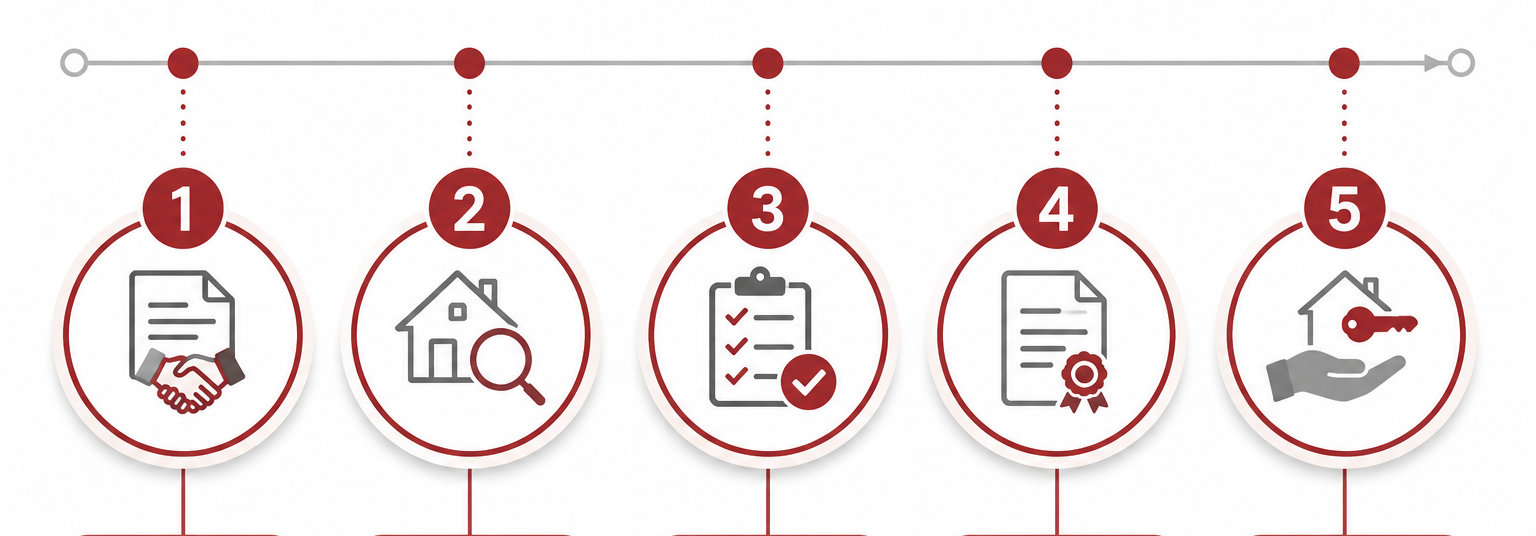
Week 1: Offer Accepted
Once you accept an offer, the clock starts immediately.
The buyer deposits earnest money according to the purchase agreement.
The closing attorney is selected.
The attorney opens the file and begins:
- Ordering title work
- Contacting the buyer’s lender
- Requesting mortgage payoff information
- Preparing preliminary closing documents
This is also when I verify every deadline in the contract.
Those include:
- Inspection period
- Financing contingency
- Appraisal
- Repair deadlines
- Closing date
- Possession
Missing one deadline can create problems later.
You’ll also receive seller information forms asking for things like:
- Mortgage account numbers
- Forwarding address
- HOA information
- Preferred wire instructions
Return these as quickly as possible.
Small delays now often become big delays three weeks later.
Week 2: Inspections and Negotiations
This is usually the busiest week.
The buyer schedules inspections.
Depending on the property, that may include:
- General home inspection
- Termite inspection
- Roof inspection
- HVAC inspection
- Sewer inspection
- Septic inspection
- Well testing
- Flood-related evaluations
Almost every buyer asks for something.
Don’t panic.
An inspection report is a negotiation tool, not a report card on your home.
I usually separate repair requests into three categories.
Must-do items
Safety issues.
Loan-required repairs.
Items likely to stop financing.
Reasonable requests
Legitimate maintenance concerns.
Items worth negotiating.
Wish list items
Cosmetic upgrades.
Personal preferences.
Nice-to-have requests.
Not every inspection item deserves a seller credit.
If you’re deciding where to spend money before closing, read What to Fix Before Selling Your Savannah Home by ROI first. It can save thousands of dollars on unnecessary repairs.
Week 3: Appraisal and Loan Approval
Once inspections are finished, attention shifts to financing.
The lender orders the appraisal.
The appraiser determines whether the home supports the purchase price.
If the buyer is using a VA loan or FHA financing, the appraiser may also identify repairs required before closing.
Meanwhile, underwriting continues.
The lender reviews:
- Income
- Employment
- Assets
- Credit
- Insurance
- Appraisal
- Loan conditions
As the seller, you can’t control underwriting.
You can control how quickly you respond when paperwork is requested.
Fast communication keeps transactions moving.
Slow communication kills momentum.
Weeks 4 and 5: The Final Stretch
This is where everything comes together.
The closing attorney completes the title search.
Mortgage payoff figures are finalized.
The deed is prepared.
Settlement figures are calculated.
The buyer performs the final walk-through.
Contrary to popular belief, the walk-through is not another inspection.
It’s simply confirmation that:
- Repairs were completed
- The home is in the expected condition
- Included items remain with the property
Next comes signing day.
Once everyone signs…
The attorney records the deed.
Funds are released.
Your proceeds are wired.
Simple.
Provided everything before this point was handled correctly.
The Nine Documents You’ll Actually Sign
Most sellers expect stacks of paperwork.
The reality is much simpler.
These are the documents you’ll likely see.
1. Settlement Statement
This is your financial summary.
It lists:
- Sales price
- Mortgage payoff
- Taxes
- Commissions
- Credits
- Attorney fees
- Your net proceeds
Review every number before signing.
2. Warranty Deed
This transfers ownership to the buyer.
The attorney prepares it.
You sign it.
The attorney records it after closing.
3. Affidavit of Title
This confirms there are no undisclosed issues affecting ownership.
Examples include:
- New liens
- Contractor claims
- Ownership disputes
- Undisclosed leases
Honesty matters here.
4. Bill of Sale
This transfers personal property included with the home.
Examples include:
- Appliances
- Refrigerators
- Washers
- Dryers
- Garage storage
- Other negotiated items
5. Lien Payoff Authorization
The attorney needs permission to obtain official mortgage payoff figures.
If you have:
- First mortgage
- Home equity loan
- HELOC
Every lender must be included.
6. IRS Form 1099-S Paperwork
Most sellers complete tax reporting paperwork related to the sale.
Whether taxes are owed depends on your situation.
Ask your CPA if you have questions.
7. HOA Documents
If your property belongs to an HOA, additional paperwork may include:
- Estoppel letters
- Transfer fees
- Outstanding balances
- Community disclosures
8. Power of Attorney
Traveling?
Military deployment?
Working overseas?
Many sellers can close remotely using a properly prepared Power of Attorney.
Coordinate this with the closing attorney well before closing day.
9. Wire Instructions
The attorney needs verified banking information before sending your proceeds.
Never send updated wire instructions by email alone.
Always verify them by phone.
When Do You Actually Get Paid?
This is probably the question I hear more than any other.
The short answer?
Usually the same day.
The longer answer depends on when the closing finishes and when the attorney is legally able to release funds.
Signing paperwork does not automatically mean your money is available.
Several things have to happen first:
- The buyer’s lender must fund the loan.
- The attorney must receive all required documents.
- The deed must be approved for recording.
- Every payoff amount must be confirmed.
- Any final title issues must be cleared.
Only then can the attorney authorize the wire.
Same-Day Wire
Many Savannah sellers receive their proceeds the afternoon of closing, especially when:
- Closing is scheduled early in the day.
- The lender funds on time.
- Wire instructions were verified in advance.
- No title issues appear at the last minute.
Next-Business-Day Wire
Sometimes the wire doesn’t arrive until the following business day.
That usually happens because of:
- Late afternoon closings.
- Bank wire cutoff times.
- Federal holidays.
- Delayed lender funding.
- Additional fraud verification by the bank.
Don’t panic if the money isn’t sitting in your account five minutes after signing.
Sometimes it’s simply waiting for the bank’s processing window.
One transaction I’ll never forget involved a foreclosure-pressured Coastal Georgia seller who had almost no room for delay. We built a tight timeline with the closing attorney, lender, and buyer from day one. Everything stayed on schedule, and the wire hit the seller’s account the same afternoon the documents were signed.
That closing wasn’t saved because of something magical that happened on closing day.
It was saved because everyone stayed organized for six weeks beforehand.
The Five Small Things That Delay One in Five Coastal Georgia Closings
Most delayed closings aren’t caused by huge problems.
They’re usually caused by small issues nobody caught early.
Here are the biggest ones I see.
1. HOA Estoppel Letters
If your neighborhood has an HOA, the attorney usually needs documentation showing:
Outstanding balances
Transfer fees
Violations
Current account status
Some management companies produce these within a few days.
Others can take considerably longer.
Don’t wait until the week before closing.
2. Title Problems
Title issues are more common than many sellers realize.
Examples include:
Old mortgages never released
Judgment liens
Tax liens
Probate issues
Easement questions
Incorrect legal descriptions
Most can be solved.
They simply need time.
The title search exists to uncover these issues before money changes hands.
3. Survey Discrepancies
Sometimes surveys reveal surprises.
Examples include:
Fence encroachments
Driveway encroachments
Missing easements
Improvements outside property lines
Most aren’t deal killers.
They simply require clarification before closing.
4. Final Walk-Through Disagreements
Buyers aren’t looking for perfection.
They’re looking for consistency.
Common disputes include:
Repairs weren’t completed.
Appliances were removed.
Fixtures disappeared.
The home wasn’t cleaned as expected.
New damage appeared after moving out.
My advice is simple.
Leave the house in the condition promised.
Nothing more.
Nothing less.
5. Wire Fraud
This is one issue everyone should take seriously.
Criminals target real estate transactions because large amounts of money move quickly.
Never trust:
Last-minute emails changing wire instructions.
Emails requesting secrecy.
Messages claiming the attorney changed banks.
New account numbers sent without verification.
Always verify wire instructions by calling the attorney’s office using a trusted phone number you already have.
A two-minute phone call can prevent a very expensive mistake.
Do You Need to Attend Closing in Person?
Not always.
Many sellers successfully close without ever walking into the attorney’s office.
This is especially common for:
Military families
Sellers who already relocated
Snowbirds
Investors
Out-of-state owners
Depending on your circumstances, you may sign:
Before a local notary.
Through approved remote signing procedures.
Using a properly prepared Power of Attorney.
The key is planning ahead.
Don’t mention you’re traveling two days before closing.
Let the attorney know as soon as possible.
What to Bring on Signing Day
Closing is usually straightforward if you arrive prepared.
Bring:
Government-issued photo ID.
Any requested payoff information.
Verified wire instructions.
Garage door remotes.
House keys.
Mailbox keys.
Gate cards.
Alarm codes.
Appliance manuals.
Warranty paperwork.
Extra keys you may have forgotten about.
If the buyer purchased additional personal property, make sure those items are still in the home.
Little details matter.
What Every Savannah Seller Asks Me Five Minutes Before Closing
After enough closings, you start hearing the same questions.
Here are the three I hear almost every week.
“When can I cancel my utilities?”
Usually after the closing is complete unless your contract says otherwise.
Don’t disconnect power the day before closing.
The buyer needs working utilities for the final walk-through.
“Can I leave paint cans and extra flooring?”
Ask first.
Many buyers appreciate leftover materials.
Others don’t want them.
If it wasn’t discussed, don’t assume.
“When should I hand over the keys?”
Normally after the closing is complete and the attorney authorizes possession according to the purchase agreement.
Until then, it’s still your home.
One closing that sticks with me involved a veteran seller with a distressed Richmond Hill property and a VA buyer.
Inspection repairs pushed the numbers right to the edge.
Everyone wanted the deal to work, but the math simply didn’t.
I reduced my commission so the transaction could close.
That isn’t something that happens every day.
The lesson is what matters.
Closing day rarely creates problems.
It simply reveals whether the strategy built during the listing period was strong enough to reach the finish line.
I’ve also worked with an Army homeowner couple selling a condition-challenged home that only closed because repairs, lender requirements, contractor scheduling, and attorney coordination stayed aligned from beginning to end.
Bottom line, closing is a process, not an event.
The smoother the weeks before signing, the easier the day itself becomes.
Frequently Asked Questions
How long does a Savannah home sale take to close?
Most financed home sales close within 30 to 45 days after an accepted offer. Cash purchases may close faster, while transactions involving VA loans, estates, title issues, or complex repairs may require additional time. The best way to stay on schedule is responding quickly to document requests and resolving inspection items early.
Is Georgia an attorney closing state?
When do I get paid after selling my Savannah home?
Do I have to attend a Savannah closing?
What documents do I sign as a Savannah seller?
What can delay a Savannah closing?
How much do sellers pay at a Savannah closing?
Ready to Know What Your Home Could Sell For?
If you’re thinking about selling anywhere in Savannah, Pooler, Richmond Hill, Wilmington Island, Rincon, Port Wentworth, Hinesville, or the surrounding Coastal Georgia area, start with real numbers instead of guesses.
Use our free Coastal Georgia home value calculator to get an instant estimate, then request a professional Comparative Market Analysis if you’d like a pricing strategy built around your specific property. If you have questions about the selling process or an upcoming closing, give me a call at 912-351-8935. I’m always happy to walk you through the next step before it becomes a surprise.




Join The Discussion