
By Alex Rodino, Founder, Alexander Rodino Collective | Serving Savannah & Coastal Georgia Last updated: June 27, 2026
Editorial disclosure: This guide is educational, not insurance, legal, lending, or tax advice. Confirm all flood zones, premiums, loan terms, and property taxes with FEMA, a licensed insurance agent, your lender, and the applicable county office before making an offer.

Buying a home in Savannah or anywhere along Coastal Georgia means looking past the list price and into the real cost of ownership. Savannah flood zones, FEMA Zone X, AE, and VE designations, flood insurance Savannah GA premiums, homeowner’s insurance, wind and hail deductibles, property taxes, and maintenance reserves can change the monthly number by hundreds or thousands of dollars between two homes that look similar online. This 2026 buyer’s guide breaks down the FEMA flood zones across Savannah, Pooler, Tybee Island, Wilmington Island, Skidaway Island, Richmond Hill, Rincon, and other Coastal Georgia neighborhoods, plus the cost-of-ownership questions you should answer before you write an offer.
Quick Answer
Savannah flood zones are address-specific FEMA designations that determine flood insurance requirements and pricing. Most in-town Savannah neighborhoods sit in lower-risk Zone X, while many island, marsh-front, and waterfront homes fall in higher-risk Zone AE or VE where flood insurance is typically required for federally backed mortgages. Annual flood insurance in Savannah commonly ranges from a few hundred dollars in Zone X to several thousand in Zone VE, and the true cost of owning a Coastal Georgia home includes flood insurance, homeowner's insurance, wind and hail deductibles, property taxes, and maintenance reserves, not just principal and interest.
TLDR: Savannah Flood Zones, Insurance, and Ownership Costs
- Many Savannah in-town neighborhoods are often dominated by FEMA Zone X, which is considered moderate to low risk, while island, marsh-front, riverfront, and waterfront homes are more likely to include FEMA Zone AE or FEMA Zone VE. Always confirm the exact address through the FEMA Map Service Center before writing an offer.
- Flood insurance is usually required by federally regulated lenders when a structure is in a Special Flood Hazard Area, which generally means FEMA zones beginning with A or V. Chatham County also notes that Zone X properties are not required by FEMA to carry flood insurance, but flood coverage is still recommended because homeowner’s insurance does not cover rising flood water. (Chatham County Engineering)
- For 2026 planning, many buyers should budget roughly $500 to $1,200 per year for lower-risk Zone X flood coverage, $1,200 to $4,000+ for many FEMA Zone AE properties, and $3,000 to $8,000+ for exposed coastal or FEMA Zone VE homes. Ranges vary, and the only reliable number is a property-specific quote from a licensed agent.
- Savannah home insurance cost in 2026 can change sharply by roof age, replacement cost, claims history, wind or hail deductible, distance from water, and carrier appetite.
- Before making an offer, check three things: the exact FEMA flood zone, an elevation certificate if available, and a binding insurance quote before your due diligence period ends.
- Want a flood and insurance breakdown for a specific address? Contact ARC before you write the offer.
Table of Contents
- Why Flood Zones and Insurance Matter More in Savannah Than in Most U.S. Cities
- FEMA Flood Zones Explained in Plain English
- Savannah Flood Zones by Neighborhood in 2026
- How Much Does Flood Insurance Actually Cost in Savannah?
- Homeowner’s Insurance in Savannah: What Most Buyers Do Not Expect
- The Real Cost of Owning a Home in Savannah and Coastal Georgia
- Things to Check Before You Make an Offer on a Savannah Home
- Is It Worth Buying on the Savannah Islands Given Insurance Costs?
- Frequently Asked Questions
Why Flood Zones and Insurance Matter More in Savannah Than in Most U.S. Cities
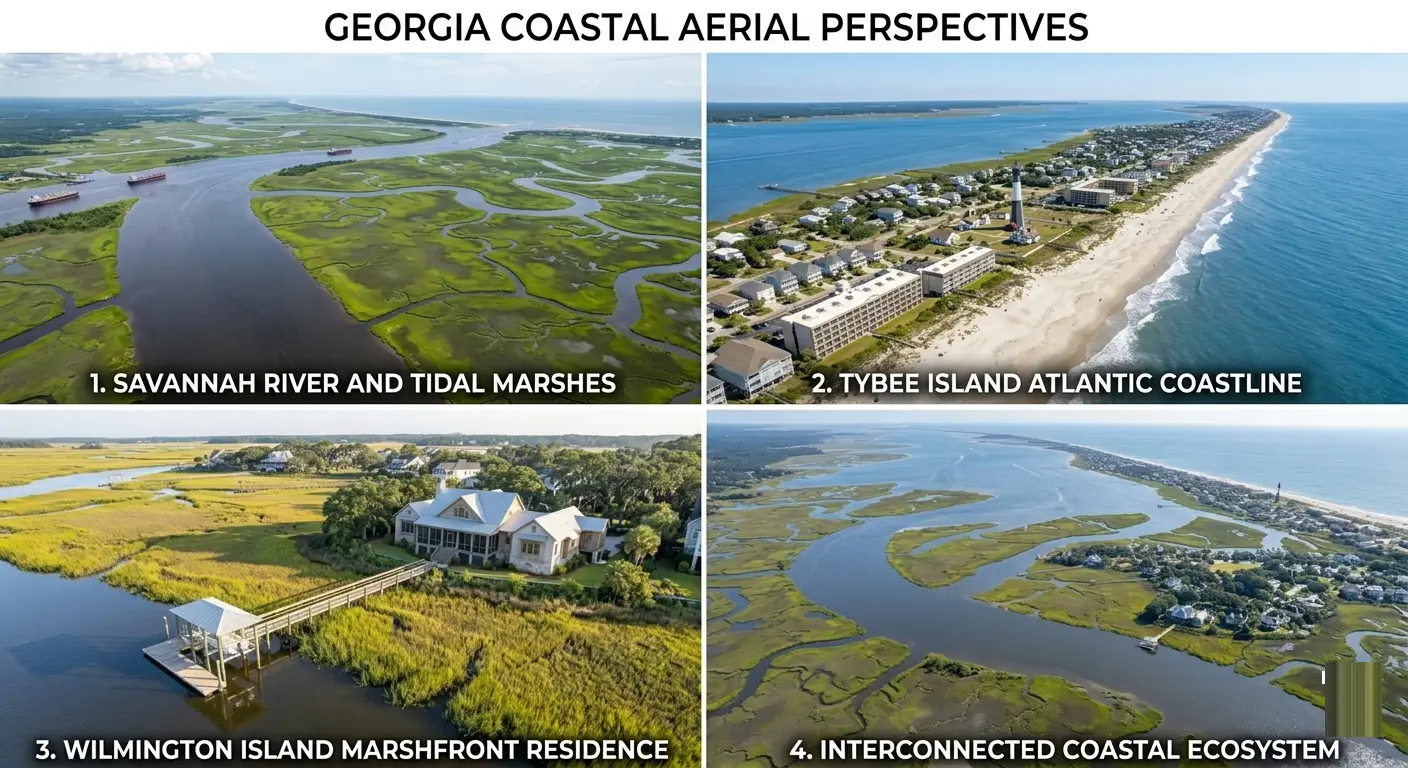
Savannah flood zones matter because the area is flat, coastal, tidal, and surrounded by rivers, creeks, marsh systems, barrier islands, and low-lying land. That does not mean every home is high risk. It means two similar homes can carry very different ownership costs depending on elevation, flood zone, drainage, age, roof condition, and distance from water.
Chatham County explains that local flooding is influenced by flat terrain, low elevations, tidal influence, rivers, canals, stormwater runoff, and hurricanes. The county also tells residents to verify their flood zone and Base Flood Elevation for the specific lot, not just the neighborhood. (Chatham County Engineering)
The storm history matters too. Hurricane Matthew brought major rainfall to Savannah in 2016, with NOAA reporting 17.48 inches at Hunter Army Air Field. Tropical Storm Irma moved into Georgia in September 2017 with a very large wind field and tropical-storm-force gusts. Idalia crossed southern Georgia in 2023 after weakening from hurricane strength, but it still showed how quickly coastal buyers can move from routine home shopping to insurance and storm-risk questions. (NOAA National Hurricane Center)
The real issue for buyers is not fear. It is math. A home in a lower-risk area with a clean roof and manageable insurance may carry one ownership profile. A similar home near marsh, tidal water, or a coastal exposure can cost thousands more per year once flood insurance, wind or hail deductibles, roof underwriting, and maintenance reserves are included.
ARC insight: In Savannah, “Is this in a flood zone?” is not the full question. Every property is in some FEMA flood zone. The better question is: “What flood zone is the structure in, what is the elevation, what does the lender require, and what will insurance cost before I remove contingencies?”
FEMA Flood Zones Explained in Plain English
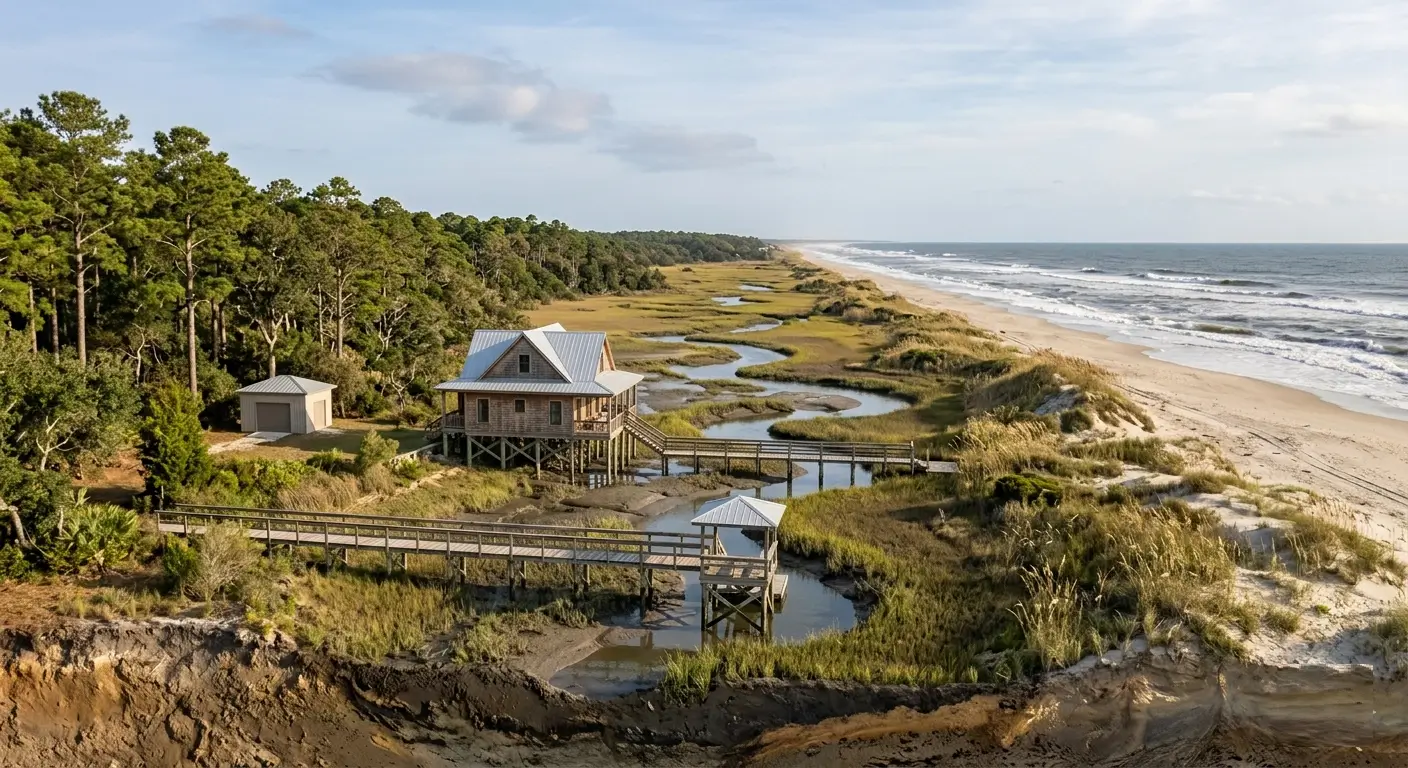
FEMA flood zones are map designations used to show flood risk and support floodplain management, lending decisions, and flood insurance rating. Flood maps are officially called Flood Insurance Rate Maps, or FIRMs. Chatham County notes that lenders use these maps to determine flood insurance requirements and FEMA uses them to help determine flood insurance rates. (Chatham County Engineering)
What is a FEMA Flood Zone?
A FEMA flood zone is a mapped risk category. It does not guarantee that a home will flood, and it does not guarantee that a home will never flood. It simply tells you how FEMA has mapped the risk for that area.
For a buyer, the key distinction is whether the structure is in a Special Flood Hazard Area, often shortened to SFHA. FEMA defines SFHAs as areas that may be inundated by a 1-percent annual chance flood. Chatham County states that SFHAs are generally shown as zones beginning with A or V. (FEMA)
FEMA Zone X, FEMA Zone AE, and FEMA Zone VE
FEMA Zone X is generally moderate to low risk. FEMA Zone AE is a higher-risk area where Base Flood Elevations are shown. FEMA Zone VE is a coastal high-hazard area with added risk from wave action. FEMA’s coastal flood map guidance notes that low to moderate hazard areas are shown as Zone X, while coastal maps may include VE, AE, AH, AO, and X zones. (FEMA)
What is a Special Flood Hazard Area?
A Special Flood Hazard Area is the higher-risk mapped area where federally regulated or insured lenders generally require flood insurance. Chatham County states that properties in high flood-risk FEMA Zone AE and FEMA Zone VE are required to carry flood insurance if there is a federally backed mortgage. (Chatham County Engineering)
The table below summarizes the zones Savannah and Coastal Georgia buyers ask about most.
Zone | Risk Level | Flood Insurance Required? | Typical Premium Range | Typical Savannah Examples |
FEMA Zone X | Moderate to low mapped risk | Usually not required by FEMA for federally backed loans | $500 to $1,200 per year for planning | Many in-town blocks, some suburban and inland areas |
FEMA Zone AE | Higher-risk floodplain with Base Flood Elevation | Usually required if the structure has a federally backed mortgage | $1,200 to $4,000+ per year for planning | Portions of islands, marsh-adjacent areas, river and creek-adjacent properties |
FEMA Zone VE | Coastal high-hazard area with wave action | Usually required if the structure has a federally backed mortgage | $3,000 to $8,000+ per year for planning | Exposed beach, dune, oceanfront, and highly exposed coastal areas |
Shaded FEMA Zone X | Moderate risk, often between the 100-year and 500-year flood areas | Usually not required by FEMA | $600 to $1,500+ per year for planning | Transitional areas near mapped floodplain boundaries |
These ranges are planning ranges only. FloodSmart states that flood insurance cost depends on risk, coverage, location, building design and age, and where contents and utilities are located. Chatham County also notes that flood zone, elevation, structure age, coverage amount, and building design can affect the quote. (FloodSmart)
Savannah Flood Zones by Neighborhood in 2026
Savannah flood zones vary by parcel, not just by neighborhood name. Use the table below as a buyer planning guide, then confirm the exact address through the FEMA Map Service Center, the Georgia Flood Map Viewer, SAGIS, or the applicable local floodplain office. Chatham County also provides flood zone determination requests and elevation certificate resources. (Chatham County Engineering)
Neighborhood | Primary FEMA Zone(s) | General Flood Risk | Flood Insurance Typically Required? | Notes |
Historic District | Much of the interior is often FEMA Zone X, with lower edges and river-adjacent areas requiring closer review | Low to moderate in many interior blocks, higher near water | Often no in interior Zone X areas, yes if the structure is in AE or VE | Street, elevation, and proximity to the river matter. |
Ardsley Park | Many homes are commonly in FEMA Zone X, with drainage and low-lying pockets to verify | Generally lower than island and waterfront areas | Often no, unless the exact structure is mapped in an SFHA | Buyers still need roof and water-claim due diligence. |
Victorian District | Often FEMA Zone X across many interior blocks, with property-level variation | Low to moderate | Often no, depending on exact address | Older-home maintenance and insurance condition can matter as much as the mapped zone. |
Starland District | Often FEMA Zone X, with stormwater and older-home condition still relevant | Low to moderate | Often no, depending on exact address | Confirm drainage history and prior water claims. |
Thomas Square | Often FEMA Zone X, with some block-by-block variation | Low to moderate | Often no, depending on exact address | Focus on exact parcel, roof age, foundation, and insurance quote. |
Baldwin Park | Many homes are commonly in FEMA Zone X | Low to moderate | Often no, depending on exact address | A clean flood zone does not replace inspection and insurance due diligence. |
Midtown | Mixed, but many residential areas are often FEMA Zone X | Low to moderate | Often no, unless the structure is in an SFHA | Verify exact address because Midtown is broad. |
Southside | Mixed FEMA Zone X and AE pockets near canals, creeks, marsh edges, and low areas | Moderate, depending on address | Sometimes | Southside is too large for neighborhood-level assumptions. |
Gordonston | Often FEMA Zone X in many interior sections | Low to moderate | Often no, depending on exact address | Buyers should still review drainage and prior claim history. |
Daffin Park / Parkside | Often FEMA Zone X in many residential areas | Low to moderate | Often no, depending on exact address | Insurance may be driven more by home age and roof condition. |
Pooler | Mix of FEMA Zone X and AE near water, wetlands, and drainage corridors | Low to moderate in many subdivisions, higher near mapped floodplain | Sometimes | Buyers asking “is Pooler in a flood zone” need an address-level answer. |
Godley Station | Often FEMA Zone X, with mapped areas near drainage and wetlands to verify | Low to moderate | Often no, but subdivision and parcel matter | HOA, drainage, and elevation should be reviewed together. |
Richmond Hill | Mix of FEMA Zone X and AE, especially near waterways, marshes, and low-lying areas | Moderate, property-specific | Sometimes | Bryan County buyers should verify flood zone and county tax details before committing. |
Rincon | Often less coastal exposure than islands, but floodplain pockets still exist | Low to moderate, depending on parcel | Sometimes | Effingham County properties still need map verification. |
Wilmington Island | Mix of FEMA Zone X and AE, with waterfront and marsh-adjacent properties often requiring closer review | Moderate to higher near marsh and water | Often yes for AE structures with federally backed loans | Wilmington Island flood insurance can vary widely by elevation. |
Whitemarsh Island | Mix of FEMA Zone X and AE | Moderate to higher near marsh and tidal influence | Sometimes to often | Confirm bridge commute, drainage, elevation, and quote. |
Talahi Island | Often mixed, with AE exposure in low and marsh-adjacent areas | Moderate to higher | Often yes for mapped SFHA structures | Elevation certificates can be especially valuable here. |
Skidaway Island / The Landings | Mix of Zone X and AE depending on location, lagoon, marsh, and water proximity | Moderate to higher near water | Sometimes to often | HOA, elevation, and insurance should be reviewed together. |
Dutch Island | Many properties require careful review because of island and marsh context | Moderate to higher | Sometimes to often | Do not assume island equals one flood zone. |
Burnside Island | Often requires close review due to marsh and water proximity | Moderate to higher | Sometimes to often | Flood, wind, septic, access, and elevation all matter. |
Tybee Island | Mix of AE and VE, with Zone VE more likely in exposed coastal sections | Higher coastal flood and wind exposure | Often yes | Tybee Island flood zone and insurance costs must be verified before due diligence ends. |
Coffee Bluff | Mixed, with higher risk near water, marsh, and low-lying areas | Moderate to higher by parcel | Sometimes to often | Waterfront appeal must be balanced against insurance and elevation. |
Georgetown | Mix of Zone X and mapped floodplain near canals, wetlands, and low areas | Low to moderate, property-specific | Sometimes | Confirm exact address, not just subdivision name. |
ARC insight: The flood map is one layer. We also look at roof age, foundation type, prior water claims, drainage, elevation certificate availability, monthly payment, HOA, commute, and resale risk. Buyers make better decisions when they see the full cost picture before they fall in love with the house.
How Much Does Flood Insurance Actually Cost in Savannah?
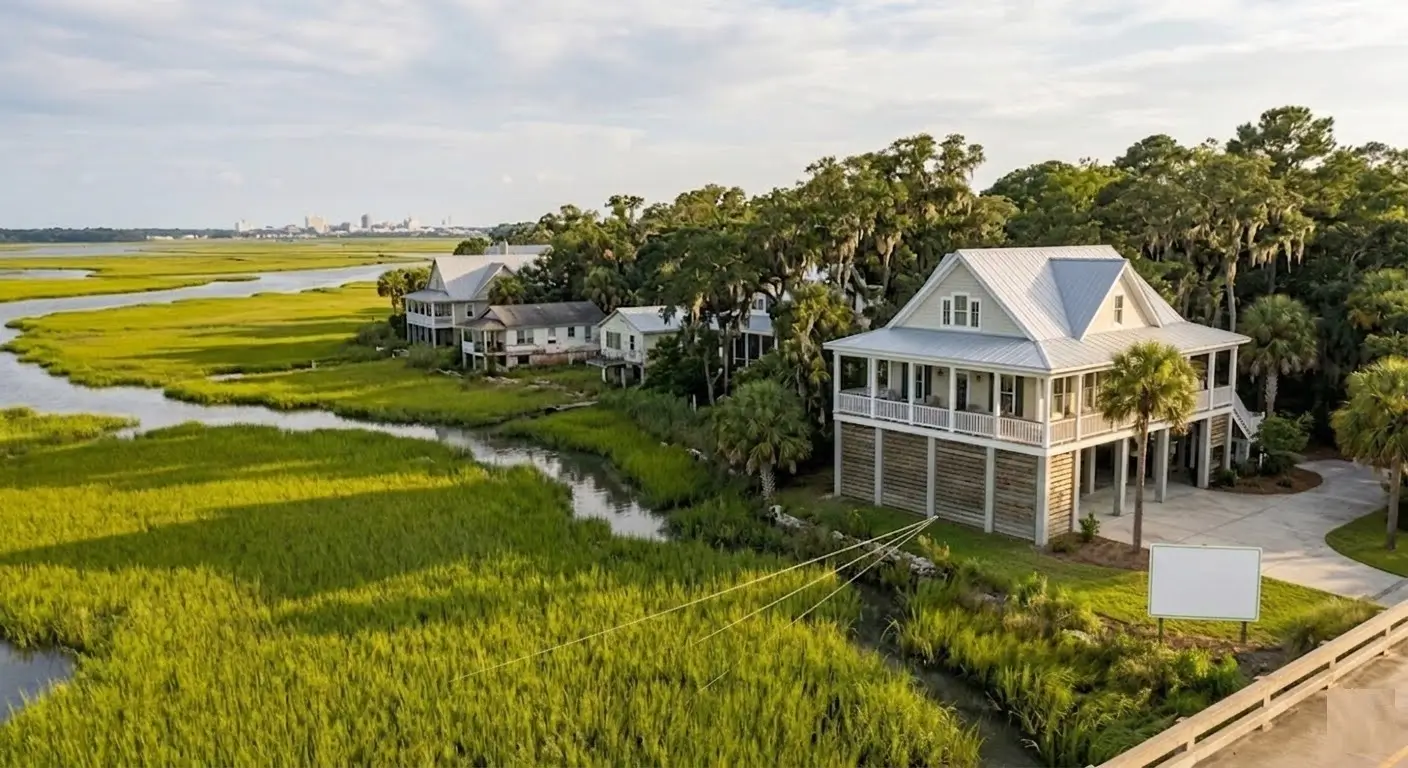
Flood insurance cost in Savannah GA is property-specific. FEMA’s current NFIP pricing approach, commonly called Risk Rating 2.0, uses more property-level risk information than older rating methods. FEMA states that the NFIP pricing approach uses actuarial principles, modeling, and technology to set more property-specific rates. (FEMA)
How NFIP Risk Rating 2.0 Changed Pricing
Before Risk Rating 2.0, many buyers focused too heavily on the letter of the flood zone. The zone still matters, especially for lender requirements, but it is not the only factor. Under current NFIP pricing, premiums can also reflect distance to water, elevation, replacement cost, coverage amount, flood frequency, foundation type, and other property-level variables.
FloodSmart tells agents that premium estimates require understanding flood risk, coverage type, location, design and age of building, and the positioning of contents and utilities. (FloodSmart)
Typical Annual Flood Premiums by Zone
The table below is a planning tool, not a quote. It is designed to help Savannah buyers avoid under-budgeting before they speak with a licensed insurance agent.
FEMA Zone | Lower Planning Range | Mid Planning Range | High Planning Range | Buyer Notes |
FEMA Zone X | $500 to $800 | $800 to $1,200 | $1,200+ | Often optional from a lender standpoint, but still worth pricing |
FEMA Zone AE | $1,200 to $2,000 | $2,000 to $4,000 | $4,000+ | Elevation and BFE relationship can make a major difference |
FEMA Zone VE | $3,000 to $5,000 | $5,000 to $8,000 | $8,000+ | Coastal high-hazard exposure can change affordability quickly |
Unknown or needs verification | Do not estimate | Get quote | Get elevation data | Do not waive contingencies without a real quote |
FloodSmart is clear that homeowners should work with an insurance provider for property-specific answers and quotes. (FloodSmart)
Private Flood Insurance vs. NFIP in Coastal Georgia
NFIP policies are backed through the National Flood Insurance Program. Private flood policies are offered by private carriers. One is not automatically better. NFIP may offer standardized coverage and broader lender familiarity. Private flood may offer higher limits or different pricing for some properties. The right answer depends on the lender, coverage needs, property condition, and carrier appetite.
FloodSmart is clear that homeowners should work with an insurance provider for property-specific answers and quotes. (FloodSmart)
The Elevation Certificate: When You Need One and What It Saves You
An elevation certificate is a document that shows key elevation data for the structure. Chatham County says an elevation certificate is used by the NFIP to properly rate homes for flood insurance policies and includes finished floor elevations, Base Flood Elevations, flood zone designation, vents, building type, and other details that can affect the quote. (Chatham County Engineering)
If you are buying in FEMA Zone AE or FEMA Zone VE, ask the seller whether an elevation certificate already exists. If it does not, ask your agent and insurance professional whether ordering one during due diligence makes sense.
Homeowner's Insurance in Savannah: What Most Buyers Do Not Expect
Homeowner’s insurance in Savannah is not just about the sale price. It is about replacement cost, roof age, construction type, claims history, distance from water, wind exposure, deductible structure, and carrier guidelines.
The Georgia Department of Insurance explains that homeowner’s insurance covers losses and damages to a private residence and contents, but coverage varies by policy, limits, deductible, property value, and other factors. The same source also notes that most policies do not cover natural disasters like floods or earthquakes, which usually require separate coverage. (Georgia Department of Insurance)
For 2026 planning, many Savannah metro buyers should think in rough ranges:
Property Type | Homeowner’s Insurance Planning Range | What Usually Drives the Difference |
In-town home with older roof or historic features | $2,500 to $5,500+ per year | Roof age, replacement cost, wiring, plumbing, claims history |
Suburban Chatham, Bryan, or Effingham home | $2,200 to $4,800+ per year | Roof age, size, carrier appetite, claims history |
Island or marsh-adjacent home | $3,500 to $8,000+ per year | Wind exposure, water proximity, replacement cost, roof, flood zone |
Many policies also use a wind, hail, or hurricane deductible. This is often stated as a percentage of dwelling coverage, not a flat dollar amount. A 2 percent deductible on $450,000 of dwelling coverage equals $9,000 before insurance pays on a covered wind or hurricane claim. A 5 percent deductible equals $22,500. Confirm the deductible type in writing with a licensed insurance agent.
ARC insight: Buyers often compare two homes by list price and monthly mortgage payment. In coastal Georgia, the smarter comparison is list price plus taxes, homeowner’s insurance, flood insurance, HOA, roof risk, and likely maintenance. A cheaper house can be more expensive to own.
The Real Cost of Owning a Home in Savannah and Coastal Georgia
The cost of owning a home in Savannah includes far more than principal and interest. You should budget for property taxes, homeowner’s insurance, flood insurance, HOA dues when applicable, maintenance, utilities, and reserves for older systems.
Georgia property tax is generally based on assessed value, which is 40 percent of fair market value. A mill equals $1 per $1,000 of assessed value. Chatham County’s 2025 property tax brochure and the Georgia Department of Revenue both explain this calculation method.
Georgia also offers homestead exemptions for qualifying owner-occupants. The Georgia Department of Revenue states that a homeowner is generally entitled to a homestead exemption if the home is owned and used as the legal residence as of January 1 of the taxable year. The standard statewide homestead exemption is $2,000 deducted from the 40 percent assessed value, and counties may offer more beneficial local exemptions. (Georgia Department of Revenue)
The sample table below uses a $450,000 purchase price, 20 percent down, a $360,000 loan, and Freddie Mac’s 30-year fixed-rate average of 6.23 percent as of April 23, 2026. Freddie Mac states its PMMS rate is based on mortgage rate data from thousands of loan applications submitted through its lender system. (Freddie Mac)
Estimated Annual Ownership Costs: $450K Home Example | In-Town: Ardsley Park | Metro: Pooler | Island: Wilmington Island |
Mortgage P&I | $26,543 | $26,543 | $26,543 |
Property Taxes | $6,600 to $7,400 | $5,500 to $6,300 | $5,900 to $6,800 |
Homeowner’s Insurance | $2,500 to $5,500 | $2,200 to $4,800 | $3,500 to $8,000 |
Flood Insurance | $500 to $1,200 | $450 to $1,200 | $1,500 to $4,500+ |
HOA, if applicable | $0 to $300 | $600 to $1,800 | $0 to $1,500 |
Maintenance Reserve | $4,500 | $4,500 | $4,500 |
Estimated Total Annual | $40,643 to $45,443 | $39,793 to $45,143 | $41,943 to $51,843+ |
Estimated Total Monthly | $3,387 to $3,787 | $3,316 to $3,762 | $3,495 to $4,320+ |
These are planning estimates, not quotes. Chatham County’s 2025 millage table lists county, school, transit, Savannah, Tybee Island, Pooler, and other local millage components. Bryan County and Effingham County have their own tax rates, school rates, exemptions, and city-specific rules, so a Richmond Hill or Rincon buyer should verify the exact tax district before making a final affordability decision. (Chatham County Government)
7 Things to Check Before You Make an Offer on a Savannah Home

1. Pull the FEMA flood zone for the exact address
Do not rely on the neighborhood name. Use the FEMA Map Service Center, Georgia Flood Map Viewer, SAGIS, or the local floodplain office. Chatham County states that FEMA FIRMs are available through the FEMA Map Service Center and that flood maps help lenders determine flood insurance requirements. (Chatham County Engineering)
2. Ask the seller for an existing elevation certificate
An elevation certificate can help an insurance agent rate the property more accurately. Chatham County states that elevation certificates include details that can have a profound impact on a flood insurance quote. (Chatham County Engineering)
3. Get a binding insurance quote before removing contingencies
Do not estimate insurance from a generic online calculator. Ask a licensed insurance agent for a quote based on the exact address, roof age, construction type, coverage amount, flood zone, and elevation details.
4. Review prior water claims and loss history
Ask your insurance professional what claim history is available and whether any prior water, wind, roof, or flood claim could affect underwriting. A clean inspection does not always mean a clean insurance history.
5. Check the roof age
Roof age can affect whether a carrier will write the policy, how the roof is covered, and whether replacement cost or actual cash value applies. Get documentation, not just a verbal estimate.
6. Understand the hurricane, wind, or hail deductible
Ask whether the policy has a separate wind, hail, or hurricane deductible. If it is percentage-based, convert it into dollars so you understand the real out-of-pocket exposure.
7. Ask about grandfathered NFIP policies that may be assumable
Some existing flood policies may have useful history, rating treatment, or continuity. Ask the seller, insurance agent, and lender whether any existing policy can be transferred or assumed. Do not assume this is available without written confirmation.
Is It Worth Buying on the Savannah Islands Given Insurance Costs?
Buying on the Savannah islands can be worth it for the right buyer. It depends on why you are buying, how long you plan to stay, and whether the lifestyle value justifies the insurance and maintenance profile.
The islands offer coastal air, marsh views, water access, community feel, and a different pace than in-town or suburban areas. Wilmington Island homes, Tybee Island real estate, Whitemarsh Island, Talahi Island, Skidaway Island, Dutch Island, and Burnside Island all attract buyers for different reasons.
The trade-off is that island ownership can require more disciplined due diligence. You may need flood insurance, a higher homeowner’s premium, wind or hail deductibles, more exterior maintenance, and closer review of elevation, drainage, and roof condition.
Use this framework:
- Choose in-town if you want central access, older neighborhood character, and often lower flood exposure than many island properties.
- Choose metro suburbs like Pooler, Richmond Hill, or Rincon if you want newer housing options, suburban routines, and easier cost predictability.
- Choose the islands if the setting, lifestyle, and long-term enjoyment justify the added insurance and maintenance review.
ARC can help you compare island, in-town, and metro options. Build a custom Savannah home search that includes cost-of-ownership questions from the start.
Frequently Asked Questions
Do I need flood insurance in Savannah GA?
You need flood insurance in Savannah if your lender requires it or if you want protection from rising water that homeowner’s insurance usually excludes. FEMA flood insurance is typically required for federally backed mortgages when the structure is in a Special Flood Hazard Area. Many Zone X buyers still price flood coverage for peace of mind. (Chatham County Engineering)
What flood zone is Ardsley Park in?
Much of Ardsley Park is commonly treated as lower-risk FEMA Zone X, but the only reliable answer is the exact property’s FEMA map result. Confirm the parcel through FEMA’s Map Service Center, SAGIS, or a floodplain office before you rely on the zone.
Is Tybee Island a flood zone?
Yes, Tybee Island includes mapped FEMA flood zones, including higher-risk coastal areas. Many properties may require flood insurance if financed with a federally backed mortgage. The specific Tybee Island flood zone depends on the exact address, elevation, and location relative to beach, dune, marsh, and tidal exposure.
Is Pooler in a flood zone?
Pooler has multiple FEMA flood zones, including many lower-risk Zone X areas and some higher-risk mapped floodplain areas. The correct question is not whether Pooler is in a flood zone, but what zone the exact structure is in. Verify the address before making an offer.
How much is flood insurance in Savannah?
Flood insurance in Savannah can range from several hundred dollars per year to several thousand dollars per year. FEMA Zone X properties are often lower, while Zone AE and Zone VE properties can be much higher. FloodSmart says premiums depend on risk, coverage, location, design, age, and utility or contents placement. (FloodSmart)
How much is homeowner's insurance in Savannah GA?
Homeowner’s insurance in Savannah GA often ranges from the low thousands to several thousand dollars per year depending on roof age, replacement cost, construction, claims history, wind exposure, deductible, and location. Island and marsh-adjacent homes often need more careful insurance review than newer inland or suburban homes.
What is an elevation certificate and do I need one?
An elevation certificate documents a structure’s elevation details and can affect flood insurance rating. Chatham County says it includes finished floor elevations, Base Flood Elevations, flood zone designation, vents, building type, and other information that can affect your quote. (Chatham County Engineering)
Can I buy flood insurance after closing?
Yes, you can usually buy flood insurance after closing, but waiting can create a coverage gap. FloodSmart states that flood insurance generally takes effect 30 days after purchase, with limited exceptions such as certain mortgage transactions. (FloodSmart)
Does Georgia require flood insurance?
Georgia does not require every homeowner to buy flood insurance. The requirement usually comes from the lender when the structure is in a Special Flood Hazard Area and the mortgage is federally backed. A lender may also require flood insurance even when FEMA does not.
Is Richmond Hill GA in a flood zone?
Richmond Hill has multiple flood zones, including lower-risk areas and higher-risk areas near marshes, waterways, and low-lying land. The exact answer depends on the property address. Bryan County buyers should confirm FEMA flood zone, insurance quote, taxes, and any HOA costs during due diligence.
Key Takeaways
- Savannah flood zones are address-specific. Never rely on a neighborhood label alone.
- FEMA Zone X is usually lower risk, but it does not mean “no flood risk.”
- FEMA Zone AE and FEMA Zone VE often trigger lender-required flood insurance for federally backed loans.
- Flood insurance cost depends on flood zone, elevation, coverage amount, structure type, replacement cost, and carrier pricing.
- Homeowner’s insurance can be just as important as flood insurance, especially for older roofs, coastal exposure, and wind or hail deductibles.
- A realistic Savannah ownership budget should include mortgage, taxes, homeowner’s insurance, flood insurance, HOA, and maintenance reserve.
- Before removing contingencies, get an address-specific flood check, elevation certificate if available, and binding insurance quote.
- ARC can help buyers compare neighborhoods by lifestyle and total cost, not just list price.
Want a Flood + Insurance Breakdown for a Specific Savannah Address?
If you are looking at a home in Savannah, Pooler, Richmond Hill, Rincon, Wilmington Island, Tybee Island, Skidaway Island, or another Coastal Georgia neighborhood, you do not have to guess.
ARC can help you review the property’s flood zone, likely insurance questions, neighborhood fit, commute trade-offs, and cost-of-ownership profile before you make a decision. This is not insurance advice, and we do not quote policies. We help you ask the right questions early so your lender, insurance agent, inspector, and closing team can give you the information you need.
Ready to start? You can browse Savannah listings by flood zone to see how each property fits your budget and risk comfort.
Author Bio
Alexander Rodino is the Founder of The ARC Platform, serving buyers and sellers across Savannah and Coastal Georgia. ARC helps clients compare neighborhoods, structure a clear buying or selling plan, and make real estate decisions with calm, organized guidance. The team’s approach is options-first, practical, and built around the details that affect daily life, including commute, home condition, flood exposure, insurance, and long-term fit.
Sources:
- FEMA Map Service Center: official Flood Insurance Rate Maps (FIRMs)
- FEMA Risk Rating 2.0: current NFIP pricing methodology
- FloodSmart.gov: National Flood Insurance Program (NFIP) consumer guide
- Georgia Flood Map Viewer: state-level flood mapping for Coastal Georgia
- SAGIS (Savannah Area Geographic Information System): Chatham County parcel and flood data
- Chatham County Government: local floodplain management and elevation certificates
- NOAA National Hurricane Center: storm history, advisories, and reports
- Freddie Mac Primary Mortgage Market Survey (PMMS): weekly mortgage rate average
- Georgia Department of Insurance: homeowner's insurance consumer information
- Georgia Department of Revenue: property tax assessment and homestead exemption rules



Join The Discussion