
TL;DR (Relocating to Savannah in 60 seconds)
If you’re moving to Savannah GA, you’re probably balancing two big questions at once:
- Savannah changes block by block, so “best neighborhood” depends on your daily routine, not online rankings.
- Most buyers fit into one of three lifestyle zones: in-town/historic, islands/waterfront, or metro suburbs.
- Start with 7 priority questions (commute, walkability, home style, yard, water, noise, budget flexibility).
- Narrow to 2 to 4 areas, then tour intentionally (day and night) to confirm “feel” and traffic.
- Buy smart by locking location first, then defining non-negotiables and trade-offs.
- If you want speed without stress, set up a private Savannah home search that matches your true criteria.
- Where do I want to live day-to-day?
- How do I buy smart in a market where the “right” home can disappear quickly?
This Savannah relocation guide is designed to help you make confident decisions, whether you’re relocating to Savannah GA for work, lifestyle, family, military, retirement, or a fresh start. You’ll get a practical framework for narrowing down neighborhoods, understanding how Savannah “feels” across different areas, and building a plan for your timeline and budget.
If you want help building a neighborhood shortlist and a tailored search strategy, I can set you up with a private Savannah home search that matches your exact criteria and updates frequently.
Quick Snapshot: Living in Savannah GA (What Newcomers Notice First)
In brief: Savannah is not one “vibe.” It shifts by neighborhood, street, and even block. Choose a lifestyle zone first, then pick the micro-area that fits your routine.
Living in Savannah GA is not one single experience. Savannah changes block by block: historic streets and parks in town, island life near the water, and fast-growing suburban pockets with newer construction.
Most relocation buyers quickly realize Savannah has three broad lifestyle zones:
- In-town and historic: walkable pockets, character homes, parks, restaurants, shorter commutes into the city core
- Islands and waterfront: marsh views, boating access, coastal feel, and an “away from it all” vibe
- Metro suburbs: more space, newer homes, planned communities, and easy access to major routes
The goal is not to find “the best” place overall. It’s to find the best fit for how you actually live.
Start With Your Priorities: The 7 Questions That Decide Your Neighborhood
In brief: Before you shop Savannah GA homes for sale, define your commute, lifestyle, and budget flexibility. These seven questions cut through noise fast and prevent regret.
Before you look at Savannah GA homes for sale, get clear on what you need. These questions quickly narrow the field:
- Commute reality: Where do you need to be (and how often)?
- Walkability: Do you want to walk to coffee, parks, and dining, or is that a nice-to-have?
- Home style: Historic charm, mid-century, new construction, condo/townhome, or low-maintenance?
- Lot size and privacy: Yard space vs. location convenience
- Water factor: Do you want marsh views, boat access, or island proximity?
- Noise and traffic tolerance: tourist zones vs. residential quiet
- Budget and flexibility: Are you shopping at your top number, or do you want room for improvements?
Once you answer these, a Savannah neighborhood guide becomes much easier to use because you’re filtering through your lifestyle instead of scrolling endlessly.
A Savannah Neighborhood Guide: High-Level Areas to Consider
In brief: Think of this as a “fit map,” not a ranking. Pick the zone that matches your lifestyle, then narrow to specific streets and pockets.
Below are broad categories most relocation buyers consider. This is not a ranking, it’s a fit map.
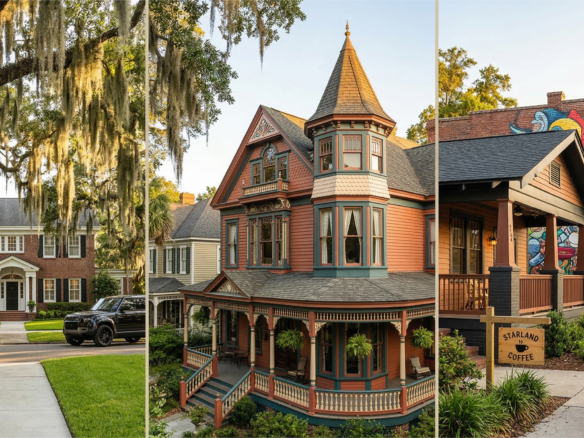
1) Historic and In-Town Feel (Charm + Proximity)
If your vision of Savannah includes trees, parks, historic architecture, and being close to dining and culture, you’ll likely want to explore in-town options.
What people love:
- Character and architecture
- A strong sense of place
- More walkable pockets
Watch-outs:
- Home age and maintenance expectations
- Variation street-to-street in parking, noise, and traffic
This is where the “Savannah changes block by block” reality is most true.
2) Islands and Coastal Lifestyle (Water + Views + Space)
If you’re relocating to Savannah GA specifically for the coastal lifestyle, the islands and waterfront areas are often at the top of the list.
What people love:
- Marsh and water influence on daily life
- A more relaxed pace
- Boating and outdoor access
Watch-outs:
- Different commute patterns depending on the island
- Some areas carry a premium for water-adjacent lifestyle
3) Metro Suburbs and Growth Areas (Newer Homes + Convenience)
For buyers who want newer builds, planned neighborhoods, or more space, the metro suburbs are a strong option.
What people love:
- Newer construction options and modern layouts
- Convenient access to shopping corridors and major routes
- Often more predictable home maintenance
Watch-outs:
- Less “historic Savannah” feel
- Longer drives into the most walkable in-town pockets
This is also where many new construction and growth areas near Savannah show up.
The Relocation Timeline: How to Move Without Feeling Rushed
In brief: Use a simple timeline: clarify rent vs. buy, narrow areas early, get financing ready, then tour neighborhoods intentionally so you can move fast when it counts.
Here’s a practical Savannah relocation guide timeline that fits most buyers:
60 to 90+ days out
- Decide: rent first vs. buy first (depends on risk tolerance and schedule)
- Identify 2 to 4 best-fit areas (not 12)
- Set financing clarity early (pre-approval beats guessing)
30 to 60 days out
- Start your private Savannah home search with filters that match real priorities
- Schedule a scouting trip (or virtual tours) focused on neighborhoods, not just homes
- Collect decision-making info: commute test, noise, traffic flow, and day/night feel
0 to 30 days out
- Move into action with clear must-haves and a plan for trade-offs
- Be ready to move quickly on the right home, but only after confirming location fit
Renting First vs. Buying First When Moving to Savannah GA
In brief: Rent first if neighborhood fit is uncertain. Buy first if your preferred lifestyle zone is clear and you have strong local guidance and clean financing.
A common question for people moving to Savannah GA is whether to rent first to learn the city.
Renting first can be smart if:
- You haven’t spent time in Savannah before
- Your job timeline is uncertain
- You want to explore neighborhoods before committing
Buying first can be smart if:
- You already know the lifestyle zone you want
- You want stability and to avoid multiple moves
- You’re comfortable making a location decision with guidance and data
A practical rule:
- If neighborhood fit is unclear, rent first. If fit is clear, buy first.
Buying Smart: How to Narrow Homes Without Missing Great Options
In brief: Don’t shop by finishes. Shop by location, non-negotiables, and planned trade-offs. That’s how you buy smart in Savannah without feeling rushed.
When you start browsing Savannah GA homes for sale, it’s easy to get distracted by finishes and staging. A better method:
Step 1: Lock location first
Great countertops don’t fix a commute you hate.
Step 2: Define your non-negotiables
Examples:
- 3 bedrooms minimum
- Single-story
- Office space
- Yard size
- No HOA vs. HOA OK
- New construction only vs. historic only
Step 3: Create your trade-off list
What you will compromise on:
- Cosmetic updates
- Paint, flooring
- Fixtures
- Landscaping
- Minor layout quirks
Step 4: Use a structured Savannah home search
A real search strategy filters noise and surfaces opportunities faster than browsing portals.
Common Mistakes People Make When Relocating to Savannah GA
In brief: The biggest mistakes come from rushing the “feel” decision or assuming every Savannah address matches the historic postcard version of the city.
Here are the mistakes that cost relocation buyers time (and sometimes money):
- Trying to evaluate Savannah from one weekend
- Falling in love with a home before confirming neighborhood fit
- Assuming every “Savannah address” feels like historic Savannah
- Skipping a plan for flood zones, maintenance, and insurance considerations
- Not defining a decision deadline (which leads to endless browsing)
If you’re relocating to Savannah GA, the goal is to shorten the learning curve without rushing the decision.
How We Help Relocation Buyers (What You’ll Get)
In brief: You get a neighborhood strategy, a clean shortlist, and a private search that matches how you actually live, so you can move fast with confidence when the right home appears.
If you want guidance, We don’t just send listings. We help you:
- Build a neighborhood shortlist based on lifestyle priorities
- Compare areas realistically (day-to-day living, not just photos)
- Create a private Savannah home search that matches your must-haves
- Move confidently when the right home hits the market
- Avoid “almost right” homes that create long-term regret
FAQ: Moving to Savannah GA
How do I choose the best neighborhoods in Savannah?
The best neighborhoods in Savannah depend on your priorities: walkability, commute, home style, water access, and budget. The fastest path is narrowing to 2 to 4 areas and touring them intentionally at different times of day.
What’s the best way to start if I’m relocating to Savannah GA from out of state?
Start by choosing your lifestyle zone (in-town/historic vs. islands/waterfront vs. suburbs). Then build a structured Savannah home search with your real non-negotiables so you’re not chasing listings that will never fit.
Can you help me compare neighborhoods even if I’m not ready to buy yet?
Yes. Many relocation buyers begin with a neighborhood strategy first. Once fit is clear, timing and financing decisions get easier and faster.
How many neighborhoods should I seriously consider when moving to Savannah GA?
Usually 2 to 4. More than that creates decision fatigue and makes tours less meaningful. You’ll make faster progress by comparing a few areas deeply rather than sampling everything.
What should I do on a scouting trip to Savannah?
Tour neighborhoods, not just houses. Drive commute routes, check parking, walk a few blocks, and compare day vs. evening noise and traffic. A scouting trip is about confirming “daily life,” not just seeing finishes.
Is Savannah a walkable city for relocation buyers?
Some pockets are highly walkable, others are not. Walkability varies by neighborhood and even street, so your goal is to pick a walkable pocket if that’s a priority, not to assume the whole city works the same way.
Should I prioritize historic charm or newer construction?
It depends on maintenance tolerance, layout needs, and lifestyle. Historic homes can offer character and location, while newer builds often provide modern floorplans and predictability. The “right” choice matches your daily routine and risk tolerance.
Do flood zones matter when buying a home near the water or marsh?
They can. If you’re considering islands, waterfront, or low-lying areas, you’ll want to evaluate flood risk, insurance implications, and elevation-related considerations before committing. This is a normal part of buying smart in coastal markets.
What’s the biggest mistake people make when relocating to Savannah GA?
Falling in love with a house before confirming neighborhood fit. Location drives daily happiness, commute stress, and resale resilience more than finishes.
How competitive is the Savannah housing market?
It varies by neighborhood, price point, and inventory. The safest approach is being fully prepared (financing clarity, clear criteria, a trade-off plan) so you can act quickly when the right home appears.
Is it better to rent first when moving to Savannah GA?
Renting first is smart if you’re unfamiliar with the area or unsure about neighborhood fit. Buying first can work if your lifestyle zone is clear and you have strong local guidance plus a clean decision framework.
How do I avoid overpaying as a relocation buyer?
Avoid shopping emotionally. Use a structured comparison (location fit, condition, long-term maintenance expectations, and realistic trade-offs). The more clarity you have up front, the less likely you are to chase the wrong home.
Can I build a private home search that filters out “wrong fit” listings?
Yes. A private Savannah home search should reflect your true priorities (location zones, commute, home style, HOA preference, layout needs) so you spend time only on realistic options.
What if I’m relocating for military, work travel, or a tight timeline?
Then strategy matters even more. You’ll want a tighter shortlist, faster neighborhood validation (including virtual tours if needed), and a decision framework that reduces hesitation without forcing rushed choices.
When should I talk to a local agent during my relocation?
As early as you’re ready to define priorities and shortlist areas. The earlier you align on location fit and a search strategy, the smoother and faster your home-buying decisions become.


Join The Discussion