
If you’re searching homes for sale in Savannah Historic District, you’re not just shopping for a property; you’re buying into one of the most walkable, visually iconic, and culturally rich urban environments in the South. The Historic District isn’t a single “neighborhood” in the typical suburban sense. It’s a living collection of streetscapes, squares, architectural eras, and micro-areas where two homes a block apart can feel like they belong to different worlds.
This guide breaks down what it’s really like to live here: how walkable it is, what kinds of homes you’ll find, what everyday life feels like, and what costs you should plan for (beyond the price tag). If you want a sharper, local read on availability, pricing strategy, and timing, connect with a Savannah Historic District realtor who works this area consistently; inventory moves differently here than it does in newer parts of Savannah.
TL;DR — Savannah Historic District at a Glance
Walkability: Extremely walkable; most daily errands, dining, and green space are accessible on foot, though experience varies block by block.
Home types: Historic single-family homes, townhomes, and condos (including condo conversions). Prices vary widely; the North Historic District median listing was around $635,000 as of late 2025.
Lifestyle: Urban, walk-first, design-forward. Best for buyers who value character, architecture, and proximity to dining, parks, and cultural events over square footage and garage access.
Ownership costs beyond the price tag: Expect higher insurance premiums on historic structures, ongoing maintenance that often requires specialist trades, and parking stress on many blocks even if you’re primarily walking.
Permits and rental rules: Savannah regulates short-term vacation rentals through designated overlay districts; don’t assume every Historic District property qualifies.
Best fit for: Professionals, second-home buyers, architecture enthusiasts, and anyone who prioritizes a “place-based” lifestyle. If you need a two-car garage, newer systems, and quiet suburban streets, compare alternatives first.
1) What “Historic District” Really Means in Savannah
In brief: Savannah’s Historic District is not one uniform neighborhood; it’s a collection of distinct blocks, squares, and micro-areas with different noise levels, foot traffic, parking realities, and home types. Choosing the right block matters as much as choosing the right home.
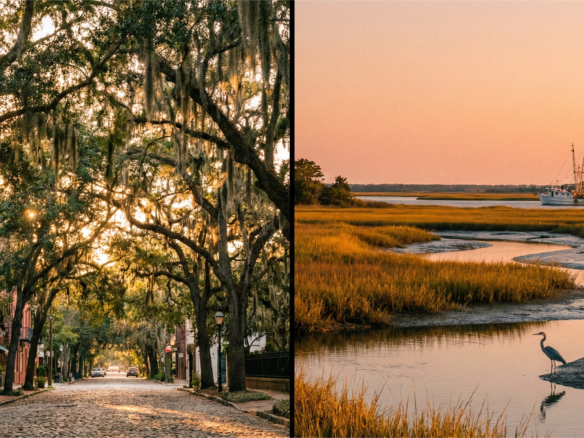
Savannah’s Historic District is known for its famous squares, mature oak canopy, and preserved architecture; but within the broader “Historic District” label, there are different blocks, vibes, and home types that influence lifestyle and cost. Some areas lean quiet and residential. Others are closer to heavier foot traffic, dining corridors, and visitor activity.
What this means for buyers: when you’re browsing Savannah Historic District homes for sale, you’ll want to evaluate not only the home; but the block: noise levels, parking reality, nearby commercial activity, and whether your daily routine will be walking-first or car-dependent.
2) Lifestyle: What It Feels Like to Live Here Day to Day
In brief: Daily life in the Historic District is walk-first and social; most residents handle coffee, dining, errands, green space, and waterfront access on foot. The trade-off versus newer Savannah neighborhoods is less private space and parking in exchange for character, convenience, and proximity to everything.
Walkability and “small-distance living”
The Historic District is one of the rare places in the region where your weekly routine can become mostly walk-based: coffee, dining, green space, events, and waterfront access (depending on exact location). For many buyers, that’s the main draw.
Practical lifestyle notes:
- You’ll walk more than you drive, especially if you choose your block intentionally.
- Errands and social life are easier when you’re not commuting for every activity.
- Visitors are part of the landscape in some pockets; great for energy, not always great for quiet.
The social vibe
Historic District living often skews toward professionals who like an urban routine, design-forward buyers drawn to architecture, second-home owners, and buyers who value “place” as much as square footage.
If you’re comparing the Historic District to newer neighborhoods, the trade-off is simple: the Historic District offers character and walkability, while newer areas may offer more space, garages, and easier parking.
3) Home Types You’ll See Most Often (and What to Watch For)
In brief: The Historic District’s housing stock includes classic single-family historic homes, attached townhomes, and condos (including conversions of older buildings). Single-family homes often come with original details and older systems that require deeper inspections. Townhomes offer a middle ground on maintenance. Condos appeal to lock-and-leave buyers who prioritize lifestyle over space.
When people think homes for sale in Savannah Historic District, they often picture classic row-style facades, wrought-iron details, brick exteriors, and preserved interiors. In reality, the housing stock is varied, and it helps to shop by “type”:
Historic single-family homes
These can range from compact, charming footprints to large, statement properties. Common characteristics include original hardwoods, tall ceilings, plaster walls, and older mechanical systems (HVAC, plumbing) that vary by renovation quality. Many blocks offer limited or no driveway/garage access.
Buyer tip: Budget for inspections that go deeper than “standard.” Historic homes can be incredible—but you want clarity on structural components, electrical updates, moisture management, and roof condition.
Townhomes and attached historic-style homes
If you want the vibe without as much renovation complexity, Savannah Historic District townhomes for sale can be a strong middle ground—often offering more standardized layouts, potentially easier maintenance, and sometimes more predictable systems depending on build date.
Condos and condo conversions
Savannah Historic District condos for sale appeal to buyers who want simplified ownership, lock-and-leave flexibility, and lifestyle-first living with walkability, dining, and events at the doorstep.
Buyer tip: Review HOA budgets, reserves, and restrictions carefully; especially if you’re considering flexible usage over time.
4) Walkability: How to Evaluate It Block by Block
In brief: The Historic District is one of the most walkable areas in the Southeast, but walkability varies by block. Evaluate lighting, sidewalk condition, nighttime comfort, proximity to places you’ll actually use weekly, noise levels, foot traffic from visitors, and parking stress; not just whether a coffee shop is nearby.
Walkability isn’t just “can I walk to coffee?” It’s also lighting and sidewalks, how you feel walking at night, how far you are from the places you’ll use weekly, noise and foot traffic patterns, and parking stress (which impacts your experience even if you walk often).
A good approach is to shortlist a few blocks, then do a real-world test:
- Morning walk route: coffee + park loop
- Evening route: dinner corridor
- Weekend route: events + busier foot traffic
If you’re serious about Savannah Historic District homes for sale, this “block test” will save you from buyer’s remorse.
5) What It Costs: Price, Ownership Reality, and Ongoing Expenses
In brief: The purchase price is only part of the cost of owning in the Historic District. Insurance premiums on historic structures run higher than standard homes, maintenance often requires specialist trades (plaster, masonry, period-appropriate materials), and parking access (or the lack of it) is a hidden cost that shapes daily life. Median listing prices in the North Historic District were around $635,000 in late 2025, but actual pricing varies significantly by micro-area, renovation quality, and home type.
Pricing perspective
Prices vary widely by exact location, home type, and renovation level. For reference, Realtor.com reported a median listing home price around $635,000 in Savannah’s North Historic District (October 2025). That’s a directional data point, not a universal rule; some homes sell far above that, and others (especially certain condo or smaller footprints) may land below it.
What to do next: If your goal is to buy confidently, have your Savannah Historic District realtor pull recent sold comps (not just active listings), price-per-square-foot patterns by micro-area, and renovation-quality adjustments; this matters a lot here.
Insurance and maintenance expectations
Historic properties can carry higher insurance premiums (varies by structure and updates), higher ongoing maintenance needs, and more specialist trades involved for repairs; think plaster restoration, period masonry, and historically appropriate window and door work.
That doesn’t mean “avoid the Historic District.” It means plan for ownership like a pro.
Parking as a “hidden cost”
Even if you’re walk-first, parking stress can shape your daily life. If parking ease is a priority, you may pay more for a home with off-street parking; or choose a product type where parking is more manageable.
6) Short-Term Rental and Usage Considerations
In brief: Savannah regulates short-term vacation rentals through designated overlay districts with specific eligibility requirements. Not every property in the Historic District qualifies. If rental flexibility matters to your buying decision, confirm the property’s rental eligibility before going under contract, not after.
Some buyers exploring Savannah Historic District condos for sale or second-home options ask about short-term rental use. Savannah has a framework regulating short-term vacation rentals, including areas designated for eligibility. The City’s materials reference Short-Term Vacation Rental Overlay Districts and associated requirements.
Practical guidance: If rental flexibility matters to you, confirm usage rules for the specific property and location before you go under contract. Don’t assume “Historic District = allowed.”
7) Who the Historic District Is Best For (and Who May Be Happier Elsewhere)
In brief: The Historic District is ideal for buyers who prioritize walkability, architecture, and cultural proximity over square footage and suburban convenience. It’s less ideal for buyers who need garages, uniformly quiet streets, newer construction, or low-maintenance systems.
Best fit if you:
- want walkability and character over square footage
- enjoy being close to dining, parks, and events
- value architecture and a true “place-based” lifestyle
- can accept that older homes have quirks
You may want to compare alternatives if you:
- need a two-car garage and easy driveway life
- want quieter streets with more uniform property condition
- prefer newer systems and lower maintenance
That’s not a dealbreaker; it just means matching the neighborhood to your real daily needs.
8) How to Buy Smarter in Savannah’s Historic District
In brief: The most effective buying strategy here is to shop by block and lifestyle fit first, prioritize renovation quality over staging, get inspections calibrated for the property’s age, use recent sold comps to avoid overpaying on scarcity hype, and move decisively when a well-matched property appears; quality inventory is uneven and doesn’t last.
If you’re actively touring homes for sale in Savannah Historic District, here are the moves that typically create better outcomes:
- Shop by block + lifestyle first, not just by interior finishes
- Prioritize renovation quality over “pretty staging”
- Get inspections that match the property’s age and structure
- Use recent sold comps to avoid overpaying based on scarcity hype
- Move decisively when the right home appears; inventory quality can be uneven
A strong Savannah Historic District realtor will help you pressure-test the home against resale potential, livability, maintenance reality, and negotiation strategy.
Next step: Talk to a Savannah Historic District realtor to build a smart shortlist and a clean negotiation plan based on real comps, not guesswork.
FAQ: What Buyers Ask Most About Living in Savannah's Historic District
Is the Historic District walkable?
Yes, often extremely walkable. Most residents can handle daily errands, dining, coffee, and green space on foot. However, the exact walkability experience varies block by block depending on proximity to squares, commercial corridors, and foot traffic patterns. Test your shortlisted blocks in person before committing.
Are there condos and townhomes available in the Historic District?
Yes. You’ll commonly see Savannah Historic District condos for sale and townhomes in addition to classic single-family historic homes. Condos appeal to lock-and-leave buyers; townhomes offer a middle ground between maintenance simplicity and the character of owning a historic structure.
Is it more expensive to own a historic property in Savannah?
It can be; primarily due to higher insurance premiums on older structures, maintenance that requires specialist trades (plaster, masonry, period windows), and the cost of major system upgrades (HVAC, plumbing, electrical) in older buildings. Many owners consider the lifestyle and long-term property value worth the premium.
How much do homes cost in Savannah's Historic District?
Prices vary widely by block, home type, and renovation quality. Realtor.com reported a median listing price around $635,000 in the North Historic District as of October 2025. Some properties sell well above that; especially larger single-family homes with quality renovations, while condos and smaller footprints may be available below that figure. Ask your realtor for recent sold comps by micro-area for the most accurate picture.
Can I use a Historic District property as a short-term rental?
Not automatically. Savannah regulates short-term vacation rentals through designated overlay districts with specific eligibility rules. Some Historic District properties qualify and others don’t. Always confirm a property’s rental eligibility with the city before going under contract if rental income or flexibility matters to your purchase decision.
What should I budget for beyond the purchase price?
Plan for higher-than-average homeowner’s insurance (due to the age and construction of historic structures), ongoing maintenance costs including specialist trades, potential HOA fees if buying a condo or townhome, and, on some blocks. the added cost of securing off-street parking. A thorough pre-purchase inspection calibrated for historic properties helps avoid surprise expenses after closing.
What's the best strategy for buying in the Historic District?
Shop by block and lifestyle fit first; not just by listing photos. Walk your shortlisted blocks at different times of day to evaluate noise, foot traffic, and nighttime comfort. Prioritize renovation quality over cosmetic staging, use recent sold comps rather than listing prices to gauge value, and move quickly when a well-matched property appears because quality inventory in the Historic District tends to be uneven and doesn’t sit on the market long.
Are there any restrictions on renovating a historic home in Savannah?
Yes. Properties within Savannah’s Historic District may be subject to review by the Historic District Board of Review, which oversees exterior changes to maintain the area’s architectural character. Interior renovations are generally less restricted, but exterior modifications, paint colors, windows, roofing materials, additions. often require approval. Factor review timelines and material requirements into your renovation budget and planning.
Is parking a real problem in the Historic District?
On many blocks, yes. Street parking can be competitive, especially in areas near commercial corridors and popular squares. Some homes come with off-street parking (driveways, private pads, or garage access), but many don’t. If parking ease is important to you, it should be a filter in your home search; and expect to pay a premium for properties that include it.
Want a Tailored Shortlist for Your Lifestyle and Budget?
If you’re exploring Savannah Historic District homes for sale, I can help you narrow the search to the blocks and home types that match your lifestyle—whether you want classic historic charm, condo convenience, or a townhome footprint.
Next step: Talk with a Savannah Historic District realtor to build a smart shortlist and a clean negotiation plan based on real comps, not guesswork.

Join The Discussion